



Red football helmet OBJ model

Blue football helmet OBJ model

3D model of German fire brigade helmet

Moorish helmet
A 16th century Moorish helmet collected in the Heiligenkreis Monastery Museum. Morion helmet, an open helmet without armor. Composed of two pieces.
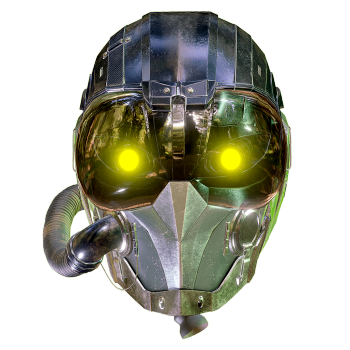
Clothing in the movie "Spider Man: Hero Returns": Vulture Helmet
Vulture is a supervillain under Marvel Comics, first appearing in the second issue of Fantastic Spider Man (May 1963), co created by Stan Lee and Steve Ditko. His real name is Adrian Toomes. He was originally an electronics engineer and had always had a dream of flying. He conducted countless experiments to create wings like birds, but due to a lack of research funding, he was deceived by a businessman and imprisoned. After escaping from prison, his temperament changed greatly. He used his invented flying suit to transform into a "vulture" and began to retaliate against society.

The character in the movie 'Guardians of the Galaxy': Star Lord
Star Lord is a superhero under Marvel Comics in the United States, first appearing in issue 8 of Thanos and co created by Steve Inghart and Steve Gunn. My real name is Peter Jason Quill, and I have a half human, half Sparta Toi bloodline. I was born to Jason Spartacus, the ruler of Sparta Toi, and Meredith Quill, a woman from Colorado, USA. Xingjue is an outstanding marksman and swordsman, skilled in hand to hand combat. He was originally fighting alone and joined the United Front in the comic book "Star Annihilation". In the 2008 comic book "Guardians of the Galaxy," a group of superheroes were recruited to form the Guardians of the Galaxy.

Clothing in the TV series' Mandalorian ': Mandalorian helmets
The Mandalorian is the first live action series of Star Wars, written and produced by Jon Favreau. The timeline of the drama is set after the fall of the empire and before the emergence of the First Order. Tell the story of a lone gunman's arduous struggle in the remote star belt of the Milky Way galaxy far from the control of the New Republic.

Modern night vision goggles, noise cancelling headphones, microphones, military helmets

British steel combat helmet Brody helmet during World War I
The Brody helmet is a steel combat helmet designed and patented by John Leopold Brodie in London in 1915. Its improved form became the British helmet, steel helmet, Mark I, and the American M1917 helmet. Simply put, it is known as the shrapnel helmet, combat pitcher, Tommy helmet, tin hat, and in the United States, it is called the Dough Boy helmet. It is also known as a disc hat, tin hoop hat, washbasin, combat bowling (when worn by officers), and Kelly helmet.

Third century Roman Empire helmet "Inlaid Golden Cavalry Helmet Nidbieber Style"
The type of cavalry helmet is the Niederbieber style, with hinged X-bars and long neck guards. Fold the edge of the neck protector (upwards) to create a clear edge impression. The helmet is currently housed in the Nijmegen Museum in the Netherlands.

World War II steel helmets for American soldiers

Gustav Vasa's steel helmet at the Royal Swedish Armory Museum
It was made in 1540 in Germany, probably in Augsburg or Nuremberg, which was home to some of the most skilled armour makers of the time. The visor is the part that covers the face and was not originally part of the helmet, but is thought to be of the same period. This helmet is quite special-looking and is one of the few well-preserved items owned by King Gustav Vasa of Sweden. The helmet is currently on display at the Royal Swedish Armoury Museum, which is located in the Royal Palace in Stockholm and is one of the oldest museums in the world. The museum houses historical artifacts from the Swedish royal family and military.

Barsanet-style steel helmet at Rida Hall Gate Church in Sweden
This helmet was made in Germany, around the middle of the 16th century. It was once mistaken for a relic of King Magnus Laduras of Sweden, who died in 1290. The helmet, together with a set of armor consisting of unrelated parts, was on display in the Church of Rida Hall, Sweden, until 1866. The church is the mausoleum of the Swedish royal family and one of the oldest churches in Sweden. It is a Basarnett-style helmet, the distinctive feature is that there is a sharp mouth protruding forward in front of the mask, the main function is to deflect frontal attacks. It was more popular in Europe in the 16th and 17th centuries and was often used to equip heavily armored pistol cavalry.

Astronaut Helmet

Popular Models

Hoffman Canglong (3D animated model)
135 View



Velociraptor (3D animated model)
132 View

YF-23(3D animated model)
103 View
Random Model

Contemplative ape statue
454 View

Maria Bar Costume (3D Action Model)
519 View

Doomsday style abandoned cottage
565 View


Shrine
517 View

Simple Metal Shed
429 View

purple cauliflower
323 View

Supermarket trolley (shopping cart)
424 View
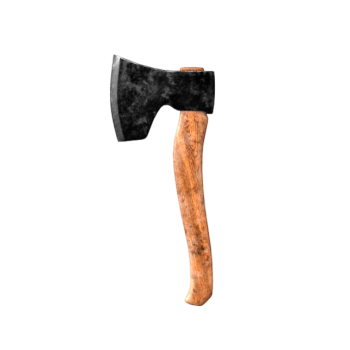
Realistic Axe
509 View

single armchair
566 View